We're excited to join Graduate Student Kaylee Lawson and the Elakha Alliance for the first-ever 5K Fun Run & Ocean Awareness Event on May 4th from 1 to 5 p.m. in Corvallis, OR! This event is a fundraiser for the Elakha Alliance's efforts to restore Oregon's sea otter population. Register here 👉 bit.ly/Ocean5k
🎉 After the 5K Fun Run, we invite the community to gather at the Peffer Amphitheater for refreshments and drinks (for those 21+) from 2 Towns Ciderhouse & Block 15 Brewing Co.
🏆 We will also award Prize Packages to the Top 3 Fun Run finishers, followed by presentations from the Elakha Alliance and Oregon Shores Conservation Coalition representatives.
______________
Kaylee Lawson is a graduate from Oregon State University with a Bachelor's in Fisheries and Wildlife Science (marine conservation focused), and is currently working towards a Conservation Master's Degree at Miami University online. For her Master's Degree, she has to complete an action component in her local community, so she connected with the Elakha Alliance to host a 5k Fun Run and Awareness Event to fundraise for the Elakha Alliance's efforts to reintroduce sea otters back to Oregon.
#oceanconservation #corvallisevents #beavernation #oregoncoast
... See MoreSee Less
Are you a brand new CoastWatcher? Been reporting for years? Used to report and are ready to jump back in? Then join us for a CoastWatch Volunteer Orientation on Thursday, May 3, on Zoom at 12 and 6 PM 🎉
In these meetings, our CoastWatch and Engagement Manager, Jesse Jones, will cover the following:
- How to fill out and submit reports 📝
- Best practices for uploading photos 📸
- Contact information for local beach rangers 🌊
- How to be a keen observer 👀
- What to do when you encounter extra large beach debris 🚮
- Opportunities to join citizen or community science projects 👩🔬
This will be an excellent opportunity to ask general questions, get to know, and offer helpful tips to other CoastWatch volunteers. Oregon State Parks Beach Rangers and District Managers will be present to answer questions about beach regulations and more when possible.
This event is free and open to all CoastWatchers; registration is required
- Noon Orientation 👉 bit.ly/CWO_Noon
- 6 PM Orientation 👉 bit.ly/CWO_6pm
Future orientations will be held every other month on the first Wednesday- watch this space for details.
Not a CoastWatch Volunteer yet? There's plenty of time to sign up before the orientation! Learn more about adopting a mile 👉 bit.ly/Join_CoastWa#oregonshoresh#coastwatchW#communitysciencei#oregoncoastC#orcoastCoast
... See MoreSee Less
Happy Earth Day! 😎🌍
This year, the theme for Earth Day is “Planet vs. Plastics,” and we’re excited to share how our CoastWatch volunteers are contributing to NOAA’s (National Oceanic and Atmospheric Administration) Marine Debris Mapping and Assessment Project (MDMAP).
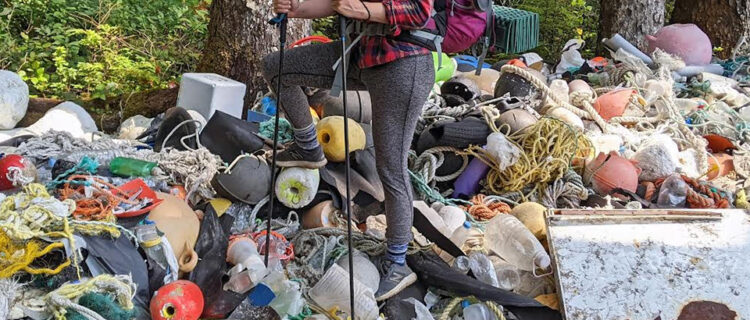
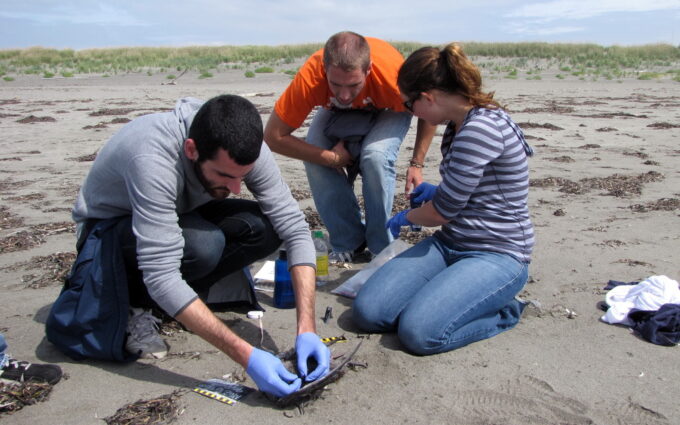
In addition to completing their Mile Report, a number of CoastWatch volunteers also collect information about marine debris on their mile or a nearby mile for MDMAP. These once-a-month survey areas are 100 meters long and stretch from the back of the beach to the water. On the day of the survey, random numbers are chosen to decide which five-meter sections (transects) will be surveyed. Beach litter in these transects is collected and logged into NOAA's online reporting system. Beach litter outside the transects and survey area is also picked up and disposed of but not counted.
The NOAA MDMAP community science project is crucial because it empowers people to actively participate in monitoring and protecting marine ecosystems, fostering a sense of ownership and responsibility. Engaging citizens in data collection provides valuable insights into changing oceanic conditions and aids in informed decision-making for conservation efforts and sustainable management practices.
Join us on April 30 for our webinar featuring Hillary Burgess, NOAA’s Marine Debris Program Specialist, to learn more about this community science project that helps researchers (and all of us!) learn more about how and why marine debris moves around the world! Register here for the Zoom link 👉 bit.ly/MDMAP_OR
... See MoreSee Less



Coastal Community Connections
We're excited to join Graduate Student Kaylee Lawson and the Elakha Alliance for the first-ever 5K Fun Run & Ocean Awareness Event on May 4th from 1 to 5 p.m. in Corvallis, OR! This event is a fundraiser for the Elakha Alliance's efforts to restore Oregon's sea otter population. Register here 👉 bit.ly/Ocean5k
🎉 After the 5K Fun Run, we invite the community to gather at the Peffer Amphitheater for refreshments and drinks (for those 21+) from 2 Towns Ciderhouse & Block 15 Brewing Co.
🏆 We will also award Prize Packages to the Top 3 Fun Run finishers, followed by presentations from the Elakha Alliance and Oregon Shores Conservation Coalition representatives.
______________
Kaylee Lawson is a graduate from Oregon State University with a Bachelor's in Fisheries and Wildlife Science (marine conservation focused), and is currently working towards a Conservation Master's Degree at Miami University online. For her Master's Degree, she has to complete an action component in her local community, so she connected with the Elakha Alliance to host a 5k Fun Run and Awareness Event to fundraise for the Elakha Alliance's efforts to reintroduce sea otters back to Oregon.
#oceanconservation #corvallisevents #beavernation #oregoncoast ... See MoreSee Less
0 CommentsComment on Facebook
Are you a brand new CoastWatcher? Been reporting for years? Used to report and are ready to jump back in? Then join us for a CoastWatch Volunteer Orientation on Thursday, May 3, on Zoom at 12 and 6 PM 🎉
In these meetings, our CoastWatch and Engagement Manager, Jesse Jones, will cover the following:
- How to fill out and submit reports 📝
- Best practices for uploading photos 📸
- Contact information for local beach rangers 🌊
- How to be a keen observer 👀
- What to do when you encounter extra large beach debris 🚮
- Opportunities to join citizen or community science projects 👩🔬
This will be an excellent opportunity to ask general questions, get to know, and offer helpful tips to other CoastWatch volunteers. Oregon State Parks Beach Rangers and District Managers will be present to answer questions about beach regulations and more when possible.
This event is free and open to all CoastWatchers; registration is required
- Noon Orientation 👉 bit.ly/CWO_Noon
- 6 PM Orientation 👉 bit.ly/CWO_6pm
Future orientations will be held every other month on the first Wednesday- watch this space for details.
Not a CoastWatch Volunteer yet? There's plenty of time to sign up before the orientation! Learn more about adopting a mile 👉 bit.ly/Join_CoastWa#oregonshoresh#coastwatchW#communitysciencei#oregoncoastC#orcoastCoast ... See MoreSee Less
0 CommentsComment on Facebook
Happy Earth Day! 😎🌍
This year, the theme for Earth Day is “Planet vs. Plastics,” and we’re excited to share how our CoastWatch volunteers are contributing to NOAA’s (National Oceanic and Atmospheric Administration) Marine Debris Mapping and Assessment Project (MDMAP).
In addition to completing their Mile Report, a number of CoastWatch volunteers also collect information about marine debris on their mile or a nearby mile for MDMAP. These once-a-month survey areas are 100 meters long and stretch from the back of the beach to the water. On the day of the survey, random numbers are chosen to decide which five-meter sections (transects) will be surveyed. Beach litter in these transects is collected and logged into NOAA's online reporting system. Beach litter outside the transects and survey area is also picked up and disposed of but not counted.
The NOAA MDMAP community science project is crucial because it empowers people to actively participate in monitoring and protecting marine ecosystems, fostering a sense of ownership and responsibility. Engaging citizens in data collection provides valuable insights into changing oceanic conditions and aids in informed decision-making for conservation efforts and sustainable management practices.
Join us on April 30 for our webinar featuring Hillary Burgess, NOAA’s Marine Debris Program Specialist, to learn more about this community science project that helps researchers (and all of us!) learn more about how and why marine debris moves around the world! Register here for the Zoom link 👉 bit.ly/MDMAP_OR ... See MoreSee Less
0 CommentsComment on Facebook
🌟 Meet some of the amazing women we partner with for our community science efforts! 🌟
🔬 From tracking wildlife to monitoring water quality, these women are making significant contributions to Oregon’s community science projects. They`re leading the charge in understanding and preserving our environment with help from people just like YOU 😎
💪 Help us support their efforts by taking the first step in your community science journey! Adopt a Coastwatch mile today and be a part of something meaningful.
🌿 Whether you`re passionate about nature, conservation, or just curious about the world around you, there`s a project for you.
🌍✨ Together, we can make a difference! Join us and be a part of something meaningful.
📸: 1. Hillary Burgess, Monitoring Coordinator, Office of Response and Restoration/Marine Debris Division at NOAA (National Oceanic and Atmospheric Administration) 2. Rhianna Bezore, Coastal Shores Specialist, Oregon Coastal Management Program, Oregon Department of Land Conservation and Development. 3. Jackie Lindsay, Science Coordinator at COASST (Coastal Observation and Seabird Survey Team). 4. Melissa Miner, Researcher at Ecology & Evolutionary Biology Department, UC Santa Cruz.
#CommunityScience #WomenInScience #CoastWatch 🌊 ...
We`re excited to join Graduate Student Kaylee Lawson and the Elakha Alliance for the first-ever 5K Fun Run & Ocean Awareness Event on May 4th from 1 to 5 p.m. in Corvallis, OR! This event is a fundraiser for the Elakha Alliance`s efforts to restore Oregon`s sea otter population. Registration linked in bio!
🎉 After the 5K Fun Run, we invite the community to gather at the Peffer Amphitheater for refreshments and drinks (for those 21+) from @2townscider & @block15brewing.
🏆 We will also award Prize Packages to the Top 3 Fun Run finishers, followed by presentations from the @elakhaalliance and @oregonshorescc representatives.
______________
Kaylee Lawson is a graduate from Oregon State University with a Bachelor`s in Fisheries and Wildlife Science (marine conservation focused), and is currently working towards a Conservation Master`s Degree at Miami University online. For her Master`s Degree, she has to complete an action component in her local community, so she connected with the Elakha Alliance to host a 5k Fun Run and Awareness Event to fundraise for the Elakha Alliance`s efforts to reintroduce sea otters back to Oregon.
#seaotters #seaotter #otters #corvallis #block15 #2townsciderhouse #oregonshores #elakhaalliance #oregonstate #5kfunrun #5k #ocean #oceanconservation #corvallisevents #beavernation #funrun #oregon #oregoncoast ...
Are you a brand new CoastWatcher? Been reporting for years? Used to report and are ready to jump back in? Then join us for a CoastWatch Volunteer Orientation on Thursday, May 3, on Zoom at 12 and 6 PM 🎉
In these meetings, our CoastWatch and Engagement Manager, Jesse Jones, will cover the following:
- How to fill out and submit reports 📝
- Best practices for uploading photos 📸
- Contact information for local beach rangers 🌊
- How to be a keen observer 👀
- What to do when you encounter extra large beach debris 🚮
- Opportunities to join citizen or community science projects 👩🔬
This will be an excellent opportunity to ask general questions, get to know, and offer helpful tips to other CoastWatch volunteers. Oregon State Parks Beach Rangers and District Managers will be present to answer questions about beach regulations and more when possible.
This event is free and open to all CoastWatchers; registration is required
- Noon Orientation 👉 https://bit.ly/CWO_Noon
- 6 PM Orientation 👉 https://bit.ly/CWO_6pm
Future orientations will be held every other month on the first Wednesday- watch this space for details.
Not a CoastWatch Volunteer yet? There`s plenty of time to sign up before the orientation! Learn more about adopting a mile 👉 bit.ly/Join_CoastWatch
#OregonShores #CoastWatch #CommunityScience #OregonCoast #ORCoast ...
Do you agree??
#oregoncoast #orcoast #pnwonderland #oregonshores ...
Happy Earth Day! 😎🌍
This year, the theme for Earth Day is “Planet vs. Plastics,” and we’re excited to share how our CoastWatch volunteers are contributing to NOAA’s (National Oceanic and Atmospheric Administration) Marine Debris Mapping and Assessment Project (MDMAP).
In addition to completing their Mile Report, a number of CoastWatch volunteers also collect information about marine debris on their mile or a nearby mile for MDMAP. These once-a-month survey areas are 100 meters long and stretch from the back of the beach to the water. On the day of the survey, random numbers are chosen to decide which five-meter sections (transects) will be surveyed. Beach litter in these transects is collected and logged into NOAA`s online reporting system. Beach litter outside the transects and survey area is also picked up and disposed of but not counted.
The NOAA MDMAP community science project is crucial because it empowers people to actively participate in monitoring and protecting marine ecosystems, fostering a sense of ownership and responsibility. Engaging citizens in data collection provides valuable insights into changing oceanic conditions and aids in informed decision-making for conservation efforts and sustainable management practices.
Join us on April 30 for our webinar featuring Hillary Burgess, NOAA’s Marine Debris Program Specialist, to learn more about this community science project that helps researchers (and all of us!) learn more about how and why marine debris moves around the world! Register for the Zoom link in our bio✨ ...
🌱🐟 Here`s our next @earthdayoregon business partner: Whitewater Ranch🌎💙
Nestled along the McKenzie River, Whitewater Ranch not only grows delicious organic blueberries but also champions sustainability every step of the way. 🌿
Their commitment to farming organically and meeting @SalmonSafe Certified regulations sets a shining example for eco-conscious agriculture, highlighting the vital land-sea connection through watersheds. 🐟✨ They also work with researchers at the University of Oregon to learn more about the effects of wildfires on pollinators and UO`s Environmental Leadership Program, which gives undergraduate students the opportunity to get field experience in conservation and restoration.
Let`s celebrate their dedication to protecting our planet and preserving our precious ecosystems! 🌊🙌
#EarthDayOregon #salmonsafe #oregonshores ...
We are DEAD SERIOUS when we tell you Monday (4/22) is the final day to order these limited-edition hats for our Earth Day Fundraiser!
(No sea lions were harmed in the making of this post- it`s a "bone clone"!)
Shop linked in our bio✨
#earthdayoregon #earthday2024 #oregonshores #oregoncoast ...
It`s almost here!! Join us at @7devilsbrewery on Earth Day 🌎 Monday, April 22, to learn about Blue Carbon estuaries as a natural climate solution!
💙 Craig Cornu with @applied_ecology and the PNW Blue Carbon Working Group will share more information on Blue Carbon and restoration
👏 Abby Knipp from @rogueclimate will share ways to take local climate action, including advocating for a healthy estuary, community, and economy.
🌿 Annie Merrill, our Ocean and Estuaries Manager, will update us on what is happening with Estuary Management Planning and how you can get involved!
No registration required, see you all there for this @earthdayoregon event!
PS: Want to see our limited-edition Earth Day hats in person? We`ll have them there! ...
Did you know 🤔 CoastWatch Miles can be adopted by individuals, families, groups, businesses, organizations, and schools?
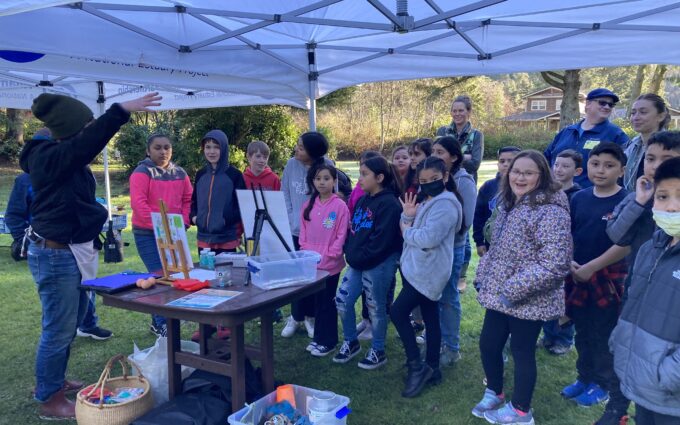
When you adopt a mile, Oregon Shores staff will support you in participating in community science. For example, we help teachers utilize their CoastWatch Mile as an outdoor classroom through our CoastWatch in the Schools program! Molly Sultany, a CoastWatch mile adopter volunteer and science teacher at Northwest Academy, brings her students to the north Oregon coast to observe sea stars for @marine_pacificrockyintertidal ⭐️
The Northwest Academy`s Science Research Program was awarded a Diack Ecology Education Grant, written by Molly`s students, to explore marine biological indicators of climate change. As part of the sea star wasting syndrome survey, the students measured sea star size and observed symptoms of the disease. The students then created a poster for the 2023 Annual Conference For Advancing Participatory Science. They gained valuable skills in grant writing, fieldwork, creating a poster, and presenting their findings. Their work is only one example of the many participatory science projects happening along our coastline right now.
Are you interested in doing something similar? Adopt a mile today, and we will connect with you to see how we can support your endeavors in community science! Visit https://bit.ly/Join_CoastWatch to get started ☀️🌊
#communitysciencemonth #coastwatch #oregonshores #participatoryscience ...
There`s still time to order our new limited-edition Earth Day hats! The last day to order is April 22, and your order will be shipped by May 3!
Shop using the link in our bio✨
#EarthdayOregon #earthday2024 #oregoncoast #oregonshores ...
🌍 Spotlight on 7 Devils Brewing: one of our Earth Day Oregon Business Partners! 🍻
We`re thrilled to have @7DevilsBrewing as an @earthdayoregon partner. 7 Devils Brewing isn`t just about crafting exceptional beer; they embody the spirit of Earth Day every day, integrating eco-friendly practices and supporting conservation efforts. Their commitment to our planet goes beyond the brew – it`s about fostering a community that values and actively contributes to a healthier Earth. 🍻🌎
🎉 And there`s more! 🎉
Join us at the Estuary Speakeasy event hosted by 7 Devils Brewing on Earth Day, April 22. It`s not just an event; it`s a celebration of our collective efforts towards a sustainable future, one pint at a time 🌍❤️
#EarthDayOregon #OregonShores ...
We had a great time celebrating with our friends @elakhaalliance this weekend for their 3rd Annual Oregon Otter Beer Festival 🍻🦦
💙 Did you know sea otters have been missing off the Oregon coast for over 100 years?
🌿They are keystone species, meaning that their presence or absence affects the entire ecosystem.
🐟 For at least 10,000 years, sea otters were an important part of the culture of the people along Oregon’s coast.
Oregon Shores and the Elakha Alliance have had ties since the beginning, sharing many board members past and present. Katie, our Education and Outreach Manager (it’s me, hi 👋), has been an Elakha Alliance board member since 2021- in fact, that’s how she learned about Oregon Shores and joined the team in 2022!
We’re proud to work alongside great organizations like this to help achieve our vision of a healthy and resilient Oregon coast where all people and nature thrive together! And thank you to the @oregonzoo and @dlxfamily who also helped make the event an absolute success 🎉
#oregoncoast #coastalconservation #seaotter ...
Here’s to getting more kids outside on the Oregon coast- your generous support makes this happen👏🎉🌊
📸: Clips taken from our time working with the @oregoncoastaquarium for the Sustaining STEAM Family Workshops
#oregonshores #oregoncoast #pnwonderland #outdooreducation ...
Did you know you have the power to protect our coastlines? Yes, you!
This Community Science Month, become a CoastWatch volunteer with Oregon Shores` Adopt a Mile Program! 💙🌊
For over five decades, Oregon Shores has championed the protection of our coast, advocating for public access and monitoring human impact. CoastWatchers have been a key part of this work for over thirty years. Adopting a mile has no monetary cost; it`s just a commitment to visit your mile at least once a season and complete a CoastWatch Report.
Why Join?
By adopting a mile, you`ll help us observe how our coastlines are used and impacted by human activities and natural changes. Your observations assist in advocating for sustainable access and preserving our beaches` natural beauty for generations to come. We will also connect you to other community science projects if you want to do more!
No Experience? No Problem!
Absolutely anyone can participate! You don`t need to be a scientist to contribute to meaningful environmental stewardship. We`ll guide you through the simple process of monitoring your adopted mile, making it easy and rewarding.
Be the Change
Adopt a mile today and join a community of passionate individuals committed to making a difference. Your involvement directly supports our ongoing efforts to understand and protect Oregon`s coastal ecosystems, landscapes, and communities.
Learn more and make a difference today by visiting https://bit.ly/Join_CoastWatch, or the link in our bio 🌊
#CommunityScienceMonth #OregonShores #CoastWatch ...
We can`t wait to see you all on Earth Day, April 22, for our "Estuary Speakeasy: Pub Talk for Blue Carbon, Natural Climate Solutions, and Restoration Opportunities in the Coos Estuary” at 7:00 p.m. It`s the perfect way to celebrate Earth Day!
📍 Where: 7 Devils Brewery (247 S 2nd St, Coos Bay, OR 97420)
🕖 Time: 7:00 p.m.
📅 Date: Monday, April 22, 2024
Learn all about Blue Carbon and estuary restoration opportunities in Coos Bay. Our friends from @rogueclimate will also be there to discuss climate justice!
Thank you to our other sponsors and participants, @EarthDayOregon, @CoosHeadFoodCoOp1971, and League of Women Voters of Coos County Oregon 🌊 ...